

The challenge
The British Columbia Bereavement Helpline (BCBH) is a provincial grief and traumatic loss support service serving people across British Columbia. BCBH supports people navigating loss by connecting them with compassionate grief support, support groups, and relevant community resources.
Growing demand for support has consistently challenged the organization’s ability to answer and process every call. Helpline volunteers were spending valuable time during and after calls searching through an extensive directory of support services. BCBH managed its resources in a shared directory that required volunteers to manually scroll through listings, review resources to identify the best fit, and prepare the information a caller needed before sending it to them via email.
“Our staff made known to the board there’s so much data. It’s so difficult to source information in a timely fashion, to be efficient with people that are looking for help.”
— Brad Martin, President of the Board of Directors, BCBH
The challenge wasn’t simply the time spent searching for resources during a call. Volunteers also spent additional time after each call compiling and preparing relevant resources to send to the caller. This administrative work reduced the capacity volunteers had to return to the helpline and answer the next call.
So BCBH turned its attention to solving its resource database problem, with the goal of reducing the time spent searching for and preparing resources, creating more capacity to support callers and answer more calls each day.
The solution
Anisha Toor, the Program Manager at BCBH, had seen Keeper’s public-facing 211 AI chat tool and wondered whether Keeper could deploy an internal version for BCBH’s helpline volunteers. It was important for the organization to maintain a human-centered helpline for community members, while using technology to improve internal efficiency and create more capacity to reach more people.
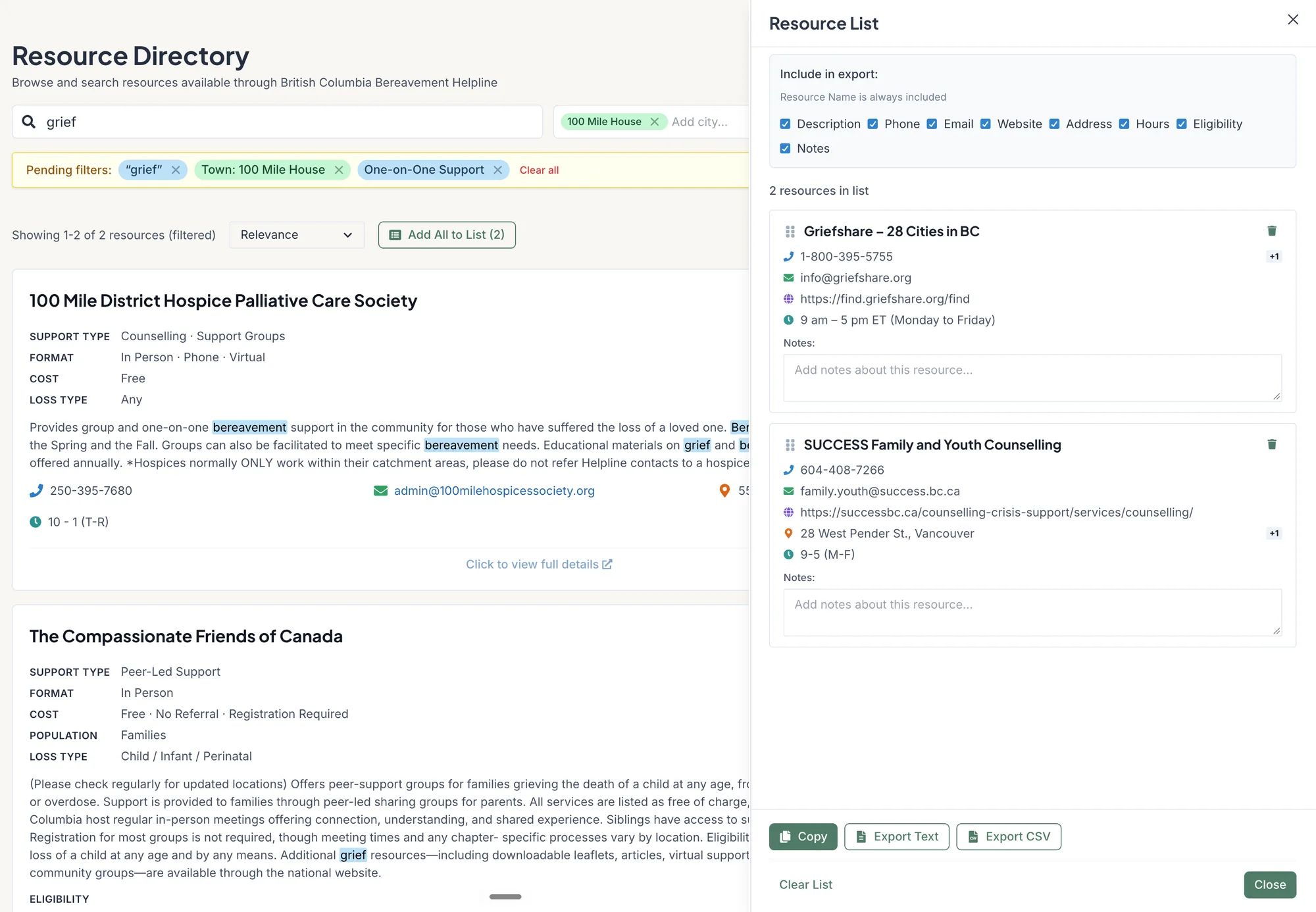
Keeper built BCBH a searchable internal resource directory that functions as a co-pilot for helpline volunteers. Designed around the different ways the team was searching for resources, Keeper will surface highly relevant resources, regardless of whether volunteers search in plain language, such as “one on one bereavement help” or more specific terms such as “Suicide loss.”
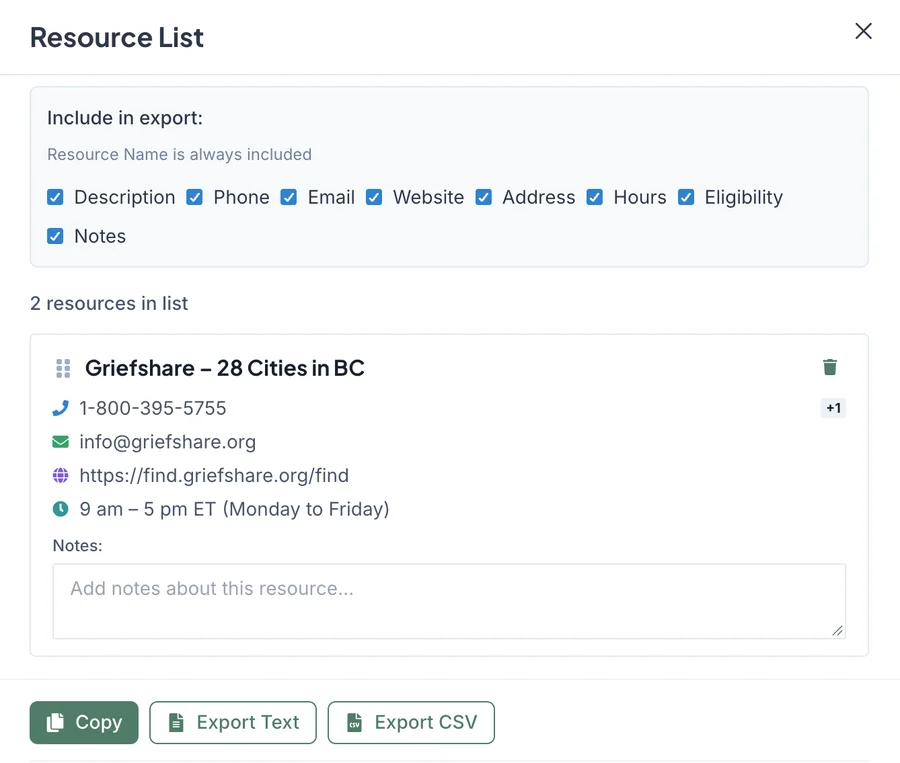
Once the helpline volunteer finds the right resource for their caller, they can easily export the relevant information into a format that can be emailed to the individual directly. By bringing resource searching and sharing into one streamlined process, the tool reduces the administrative work required after a call and helps volunteers return to the helpline more quickly.
“When a volunteer answers a call, they have to first assess the need, and then find the information relevant to that need. Keeper Systems helps make that efficient and we’re very grateful for that.”
— Brad Martin, President of the Board of Directors, BCBH
The results
By reducing the time volunteers spend searching for resources and completing the subsequent administrative work, Keeper helped BCBH create more capacity within its helpline. Less time searching, reviewing, formatting, and sending resources meant more time for volunteers to return to the helpline and support the next person reaching out for help.
Following the transition to the Keeper database, the BCBH saw a 43% reduction in missed calls compared to the previous year.
“Once Keeper Systems got involved it made the process way more simple and way more efficient. A lot more people are able to get information in the time that they are looking for help.”
— Brad Martin, President of the Board of Directors, BCBH
Grief support is deeply human. Keeper’s technology does not replace that human connection. Instead, it helps reduce some of the administrative work around it, giving BCBH volunteers more capacity to do what matters most: listen, support callers, and be available for the next person reaching out for help.